
Joint Health and Common Joint Problems
Our joints play an important role in almost every movement we make, from walking and climbing stairs to lifting objects and performing everyday activities. Healthy joints help us move comfortably and maintain an active lifestyle. However, joint pain, stiffness and swelling can affect people of different age groups and may make routine activities difficult.
Joint problems can develop due to ageing, injuries, repeated strain, inflammation or certain medical conditions. Understanding how joints work, recognising common symptoms and seeking timely medical advice can help protect joint health and maintain mobility.
What Are Joints and Why Are They Important?
Joints are the points where two or more bones meet. They allow different parts of the body to move and provide stability. Depending on their structure and function, joints help us bend, stretch, rotate and perform a wide range of physical activities.
Cartilage covers the ends of bones in many movable joints and helps reduce friction during movement. Other structures, including ligaments, tendons, muscles and joint fluid, provide support, stability and cushioning.
The knees, hips, shoulders, elbows, wrists, ankles and fingers are some of the joints we use regularly. Keeping them healthy is important for comfortable movement and everyday independence.
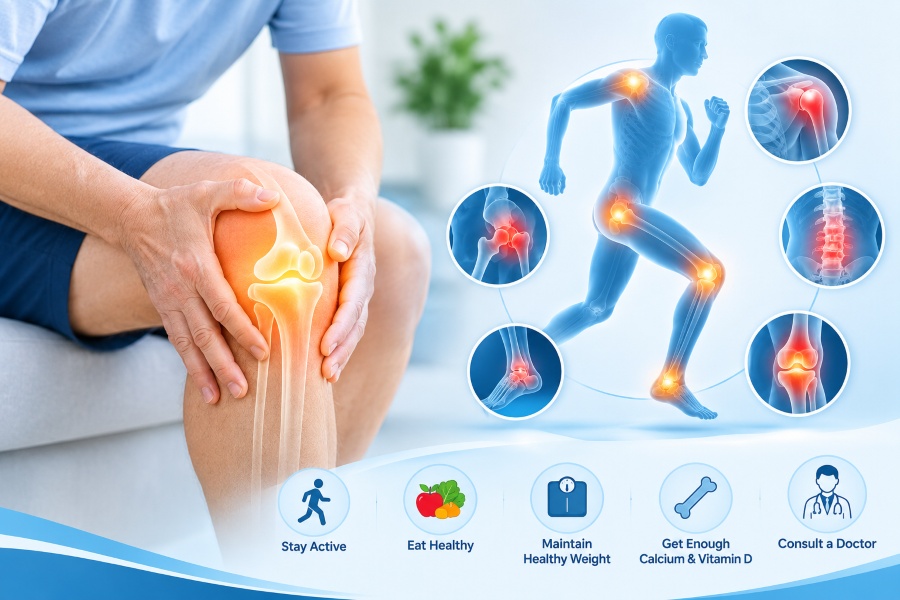
Common Joint Problems
Joint pain can have several causes. Some problems develop gradually, while others may begin suddenly after an injury or due to inflammation.
1. Osteoarthritis
Osteoarthritis is a common joint condition in which cartilage and other joint tissues gradually change and become damaged. It frequently affects the knees, hips, hands and spine. Common symptoms include:
- Joint pain during movement or activity.
- Stiffness, especially after resting.
- Swelling around the affected joint.
- Difficulty bending or moving the joint.
- A grinding or crackling sensation during movement.
Age, previous joint injuries, excess body weight and repeated stress on joints can increase the risk of osteoarthritis. It can also affect younger adults, particularly after certain injuries.
2. Rheumatoid Arthritis
Rheumatoid arthritis is an autoimmune condition in which the body's immune system mistakenly attacks the lining of the joints. This can cause inflammation and, if not appropriately managed, joint damage. Possible symptoms include:
- Pain and swelling in multiple joints.
- Morning stiffness that may last for a prolonged period.
- Warmth and tenderness around joints.
- Fatigue and general weakness.
- Similar joints being affected on both sides of the body.
Early medical evaluation is important because timely treatment can help control inflammation and reduce the risk of long-term joint damage.
3. Gout
Gout is a type of inflammatory arthritis caused by the formation of uric acid crystals in and around joints. It commonly affects the big toe but can also involve the ankles, knees and other joints.Symptoms may include:
- Sudden and severe joint pain.
- Swelling and redness.
- Warmth around the affected area.
- Extreme tenderness, even with light touch.
Gout attacks may occur suddenly, sometimes during the night. Medical assessment helps confirm the cause and guide appropriate treatment.
4. Bursitis
Bursae are small fluid-filled sacs that cushion the bones, tendons and muscles near joints. Bursitis occurs when one of these sacs becomes inflamed, commonly around the shoulder, elbow, hip or knee. Common symptoms include pain, tenderness, swelling and difficulty moving the affected area. Repeated movements, prolonged pressure or an injury may contribute to this condition.
5. Joint Sprains and Strains
Sudden movements, falls, sports activities and accidents can injure the tissues supporting a joint.
- Sprain: Stretching or tearing of ligaments that connect bones.
- Strain: Injury to a muscle or tendon.
Pain, swelling, bruising and restricted movement may occur depending on the severity of the injury. Significant injuries should be medically assessed to rule out fractures or other damage.
Common Signs and Symptoms of Joint Problems
Joint conditions can present differently, but some symptoms should not be ignored:
- Persistent pain in the knee, shoulder, hip, wrist or ankle.
- Stiffness after waking up or sitting for a long time.
- Swelling, redness or warmth around a joint.
- Difficulty walking, climbing stairs or bending.
- Reduced flexibility or range of movement.
- Joint weakness or instability.
- Pain that interferes with sleep or daily activities.
The presence of these symptoms does not automatically indicate arthritis. A proper medical evaluation is needed to identify the underlying cause.
What Increases the Risk of Joint Problems?
Several factors may affect joint health and increase the likelihood of developing joint-related conditions:
- Ageing: Changes in cartilage, muscles and other joint tissues may occur with age.
- Previous injuries: Fractures, ligament injuries and repeated joint damage can increase future joint problems.
- Excess body weight: Additional load can put greater stress on weight-bearing joints, particularly the knees and hips.
- Lack of physical activity: Weak muscles may provide less support to the joints.
- Repetitive movements: Repeated stress during work, exercise or sports may contribute to joint injuries.
- Family history: Some joint conditions may have a genetic component.
- Autoimmune and metabolic conditions: Certain medical conditions can cause joint inflammation or damage.
Not all joint conditions can be prevented, but managing the risk factors that can be changed may help maintain better joint function.
How Can You Maintain Healthy Joints?
Healthy daily habits can support joint function, muscle strength and mobility. Consider the following measures:
1. Stay Physically Active
Regular activities such as walking, swimming and cycling can help maintain mobility and strengthen the muscles supporting your joints. Choose activities according to your health and physical ability.
2. Maintain a Healthy Body Weight
Maintaining a healthy weight can reduce unnecessary pressure on weight-bearing joints, especially the knees and hips.
3. Eat a Balanced Diet
Include a variety of fruits, vegetables, whole grains, pulses, protein sources and other nutritious foods. Calcium and vitamin D are important for bone health. Discuss supplements with a healthcare professional if needed.
4. Maintain Proper Posture
Use appropriate posture while sitting, standing, lifting objects and working. Avoid remaining in the same position for long periods.
5. Avoid Excessive Joint Strain
Warm up before exercise, use suitable footwear and protective equipment during sports, and allow adequate time for recovery after strenuous activity.
6. Do Not Ignore Persistent Pain
Avoid repeatedly putting pressure on a painful joint. Seek medical advice if pain, swelling or stiffness continues or affects your daily activities.
How Are Joint Problems Diagnosed?
The diagnosis depends on the patient's symptoms, medical history and physical examination. A doctor may assess joint movement, swelling, tenderness, muscle strength and the location of pain. Depending on the suspected condition, investigations may include:
- X-ray: Helps identify changes in bones, joint spaces and certain injuries.
- MRI: May be advised to examine cartilage, ligaments, tendons and other soft tissues.
- Blood tests: May help identify inflammation or assess conditions such as rheumatoid arthritis and gout.
- Joint fluid analysis: In selected cases, a fluid sample may be examined to investigate infection or crystal-related arthritis.
Not every patient requires all these investigations. The doctor recommends tests based on the clinical assessment.
Treatment Options for Joint Problems
Treatment varies according to the type of joint condition, its severity, the patient's age and overall health. Depending on the diagnosis, treatment may include:
- Medication: Medicines may be prescribed to manage pain, inflammation or the underlying condition.
- Physiotherapy: Guided exercises can help improve flexibility, muscle strength and joint movement.
- Lifestyle changes:: Weight management and suitable physical activity may help reduce stress on affected joints.
- Injections: Certain joint conditions may be treated with injections when clinically appropriate.
- Surgical treatment: Some severe injuries or advanced joint conditions may require procedures such as joint repair or knee and hip replacement surgery.
Treatment should always be planned after proper medical evaluation. Do not start painkillers or other medication regularly without consulting a healthcare professional.
When Should You Consult a Doctor?
Do not ignore joint pain that persists, keeps returning or affects your ability to perform daily activities. Medical attention is particularly important if you experience:
- Joint pain that is getting worse.
- Swelling or stiffness that does not improve.
- Difficulty walking or putting weight on a joint.
- Morning stiffness lasting for a prolonged period.
- Sudden severe pain or swelling in a joint.
Seek urgent medical attention if a joint becomes suddenly hot and swollen, particularly when accompanied by fever or feeling unwell, as this may indicate an infection. Severe pain after an injury, inability to bear weight or a joint that appears deformed also requires urgent assessment.
Conclusion
Healthy joints are essential for movement, flexibility and an active lifestyle. Although joint problems can occur at different stages of life, recognising early symptoms and understanding their possible causes can help people seek appropriate medical care. Regular physical activity, a balanced diet, maintaining a healthy weight and avoiding unnecessary strain can support joint health. If you experience persistent pain, swelling or restricted movement, consult a doctor for proper diagnosis and treatment.
At Sawarkar Multispeciality Critical Care Hospital, Nagpur, patients can seek medical evaluation for joint-related concerns and orthopaedic conditions. The hospital's orthopaedic services include evaluation of accident-related injuries and joint conditions, with surgical services such as knee and hip replacement where clinically indicated.